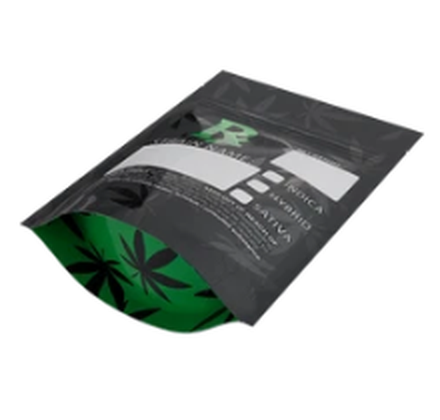
The phrase "child-resistant" gets used loosely in packaging. What it means in practice is a specific test, run on a specific finished pack, in a specific market. Here is how it works, what you should ask for, and what a factory can and cannot do for you.
Every week a brand writes to us asking for "child-resistant mylar bags, certified". The honest answer takes two minutes to explain and saves months of confusion: child resistance is a property of the finished pack, tested in the country where you sell it, with your product inside. No pouch manufacturer can send you a certificate that covers your product in your market, because the test is not run on the pouch alone.
That does not make CR packaging hard to buy. It makes it something you specify, sample and verify in the right order — which is what this guide covers.
What "child-resistant" actually requires
A child-resistant pack has to pass a protocol that measures two things at the same time: a group of children must find it difficult to open, and a group of adults must find it reasonably easy. In the United States the standard is CPSC 16 CFR 1700.20, which uses a defined panel of children and adults and a specific test procedure. Canada, the EU and the UK each have their own protocols and their own age bands.
The test is run on the finished package: pouch, closure, and — where relevant — the product inside, because contents and pack size influence whether a child can open it. That is why a supplier who offers "CR certification" as a downloadable file is usually offering you a test report for somebody else's pack.
Two ways a pack becomes child-resistant
1. A child-resistant closure
The pouch keeps a child-resistant zipper: the slider or profile needs a deliberate, two-part action — press and pull, or fold and pinch — that a young child does not complete. On a mylar pouch this is the closure you will see on the great majority of regulated products, because it keeps the pack resealable after the first opening.
We build CR zippers on every format from 3.5 g up to 1 lb. The closure is applied as part of the pouch, so it is set on the dieline before printing and cannot be added later.
2. An exit bag or outer pack
Where the rule applies to the retail unit rather than the pouch, some brands use an opaque outer bag the product leaves the store in, with a CR closure of its own. This is common where the inner pouch carries the branding and the outer pack carries the compliance.
Both routes exist for good reasons. Which one applies to you comes down to your product and your regulator — see the questions to ask a supplier before you commit to a tooling spend.
The part the factory owns — and the part you own
| What | Who does it |
|---|
| Pouch construction, film structure, CR closure fitted to the dieline | Factory (us) |
| Sample pouches for testing, sealed and unsealed, at your dimensions | Factory (us) |
| Printing your legally required warnings, pictograms and batch fields | Factory (us), from artwork you supply |
| Choosing the protocol and the panel (age bands, number of children) | You, with your testing lab |
| Running the test with your product inside and holding the report | You |
| Keeping the pack unchanged after the test passes | You and us, together |
That last line is the one that catches brands out. A CR result attaches to a pack configuration. Change the film thickness, the pouch size, the zipper supplier or the fill weight, and the configuration that passed is no longer the configuration you are shipping. If you need to change something after testing, talk to us first so we can tell you whether the change touches the closure or the pack geometry.
What to specify on the order
- Size — and whether the pouch is filled to the top or two-thirds. Fill level changes how easily a child reaches the closure.
- Closure type — child-resistant zipper, standard zip lock, or none. Note that CR and "resealable" are not the same claim; you can have both, and we would normally recommend both.
- Format — stand-up, flat or die-cut. Stand-up pouches stand on the shelf, flat pouches ship tighter in a carton.
- Sample plan — how many sample pouches the lab needs. Labs usually ask for more than brands expect, because the test destroys packs.
- Timing — build the test into your schedule before the bulk run, not after. Sampling is fast; a reprint is not.
What we send for testing
Send us the pouch size, film structure and quantity you plan to test, and we make sample pouches at your specification, with the CR zipper fitted. They carry a sample fee, confirmed up front. We do not hold a test report for your product: the pack goes to your lab, with your product inside, and the report stays with your brand.
If you are still deciding between formats, order the samples in two sizes. Comparing a stand-up and a flat pouch with your actual product in them costs very little and almost always settles the question faster than a spreadsheet.
The print side is also yours to decide
Child-resistant rules often come with labelling requirements: warnings, pictograms, batch or lot fields, sometimes a child-appealing prohibition that affects artwork. We print the artwork you supply, in full colour, front and back — matte, glossy, holographic or soft touch. What goes on the pack, and whether it satisfies your regulator, is the brand's sign-off, and that is how it should be.
Our design service is free: send a sketch or a logo and we lay it out for every panel and generate the dieline. You approve a finished pouch before the bulk run starts.
Does child resistance change the price?
A CR closure adds cost to the pouch, and it is a per-pouch cost rather than a one-off. How much depends on the pouch size, whether the zipper is applied in-line, and the quantity — a 3.5 g stand-up pouch at 1,000 pieces sits in a very different bracket from a 1 lb flat pouch at 20,000. Send the spec and we price it properly rather than quoting a rule of thumb.
What we would not do is quote a CR pack at a standard-zipper price to win the order. The closure is the part of the pack that has to survive the test.
 Sainsun Mylar Bags