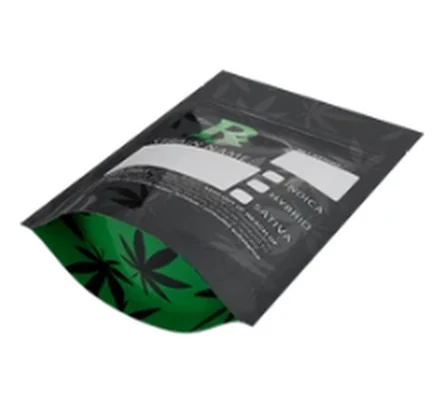
Most hemp and CBD pouch recalls are label recalls, not packaging failures: the pouch held the product correctly and the label missed a per-serving figure, used the wrong universal symbol size, or lost child resistance after the third open. The single decision that causes most of it is shipping one pouch design across states, because a resealable multi-serve pack and a single-serve pack are subject to different rules. This guide sets out the state checklist in the order a buyer should clear it, and the change that quietly voids a child-resistance test report.
The scenario repeats across hemp and CBD brands: one pouch design, one print order, shipped everywhere the courier goes. It works until it doesn't — a state inspector measures the universal symbol, finds it under the minimum, and the whole batch comes off the shelf. Or a customer report triggers a recall check and the packaging fails because it "doesn't re-lock after use", which is a real recall trigger, not a theoretical one. Compliance failures of this kind are consistently listed among the top recall causes for hemp edibles, alongside packaging that mimics children's candy and missing warnings — in other words, failures of labeling and closure spec, not of barrier film.
This guide is the buyer-side checklist: what has to be true about a mylar pouch before it ships into a regulated hemp market, and what to change in the artwork and closure spec so one order does not become fifty state problems.
First: child-resistant is a property of the finished pack, not the film
Hemp-derived consumables are not exempt from federal packaging law. The CPSC testing protocol under 16 CFR 1700.20 works like this: a panel of children aged 42 to 51 months attempts the package, and it passes for children only if at least 80% of them fail to open it within the test protocol; simultaneously, a panel of adults aged 50 to 70 must be able to open and use it — the standard expects about 90% of adults to succeed within 5 minutes. Both sides of that test matter. A pouch a grandmother cannot open is as much a failure as one a five-year-old can.
Three details follow from this, and they are where orders go wrong:
- The certification is tied to the exact combination of film, closure and sealing method. Swap to a thinner film to cut cost, or change the zipper supplier, and the test report no longer describes the bag you are selling. In states that require documentation, that is a compliance gap, not a corner cut.
- A standard zip-lock fails the test almost every time, because a single slide is a motion children learn early. Certified CR zippers demand a combined action — press-and-slide, pinch-and-pull — which is why they cost more per unit and why the premium is worth budgeting.
- CR must survive the re-close. Multi-serving packages are generally required to be resealable and child-resistant after resealing — a closure that passes once and stops locking after a few opens is the failure mode that shows up in recalls.
What "certified" actually means, who issues the report and what to ask a supplier for is covered in detail in the child-resistant mylar bags guide — read that before signing off a CR order, because the certificate is the thing your customer's regulator asks for, not the bag.
The universal symbol: small sticker, big recall risk
Most states that regulate consumable hemp require a universal THC symbol on the front of the package. The requirements sound similar and are not interchangeable:
| Jurisdiction example | Symbol requirement | Extra label anchors |
|---|
| Georgia (Dept. of Agriculture hemp rules) | Black-and-yellow symbol, minimum ½ inch tall, proportions must not be altered; sticker or printed both acceptable | Packaging must not resemble candy or any familiar food product; multi-serving packs must be resealable |
| Rhode Island (hemp-derived CBD rules) | DBR-selected universal symbol on the front, minimum 1 × 1 inch | Total THC and CBD per serving and per package, in mg, in bold red font larger than 6 pt |
| Minnesota (Statute 342.63) | State universal symbol plus a warning symbol at least ¾ inch tall × 0.6 inch wide in a highly visible colour | Warning symbol must include the state poison-control phone number; batch number on the label |
Two practical consequences for a print order. First, the symbol's size and colour are legislated, so the artwork must reserve a compliant zone for it — a symbol squeezed to 6 mm because the design ran out of room is a fail regardless of how good the bag is. Second, the "do not alter proportions" clauses mean you cannot restyle the symbol to match the brand; it is a regulatory object, not an asset. Some states accept a sticker applied post-print, which is a legitimate workaround for brands serving multiple states from one printed run — but the sticker has to survive handling, so specify label stock, not paper.
What goes on the label: the per-serving arithmetic
The label content rules converge across states even where the details differ. The recurring set:
- Cannabinoid content per serving AND per package, in milligrams, from an approved lab — Rhode Island goes further and demands this in bold, underlined red text above 6 pt so it cannot hide in the design.
- Net weight in ounces and grams, measured on calibrated equipment.
- Batch or lot number — the recall path. A beautiful pouch with no batch field has no recall story.
- Serving size and servings per package, plus use and storage instructions where applicable.
- Warnings, including some version of "keep out of reach of children" — Minnesota puts the poison-control number on the symbol itself.
Note what this means for the artwork workflow: several of these fields (batch number, sometimes potency figures) are variable data that changes per production batch. Either the design leaves a clean print-over zone for the filler line, or the brand plans a label application step — decide before the dieline is locked, not after 50,000 bags arrive. The artwork and dieline checklist covers how to hand a printer variable-data zones properly.
Multi-serving means resealable — and the state gets to define "multi-serving"
Georgia's rule is typical: consumable hemp products containing more than one serving must be in resealable packaging (vapes excepted). Rhode Island caps a multi-serving hemp package at 5 mg total THC and requires resealability; single servings are capped far lower. The limits move state by state — and they change — so the packaging decision that matters is structural: if the pack holds more than one serving, it needs a closure that re-locks, which means a CR zipper, not a heat seal with a tear notch.
This is also where the buyer's cost instinct fights the compliance requirement. Heat-seal-only pouches are cheaper and look cleaner, but they are single-use; the moment the product is a multi-serving gummy count or flower pack, the zipper is not an upsell, it is the law. The trade-offs between CR zippers, sliders and heat seals — including which combos stay senior-friendly — are compared in the closure comparison.
One design, many states: the per-SKU reality
For a brand selling into several states, the honest structure is: one pouch platform, several label/SKU variants. The film and closure stay constant (so the CR certificate stays valid); what varies is the symbol size, the warning block, potency figures and any state-mandated phone numbers. Concretely:
- Reserve the largest symbol zone you have seen across your target states — a 1 × 1 inch zone satisfies a ½ inch rule, not the reverse.
- Keep the potency/warning block in a separate panel that can be overprinted per batch and per state.
- Never let the design lean on candy visual language. "Not attractive to children" and "must not resemble familiar food products" are written into state rules, and enforcement departments have pulled products for exactly this.
- Ask the supplier to quote the variants together — same structure, different print plates — because the plate count, not the bag count, drives most of the price difference. The questions that surface this early are in the supplier vetting list.
None of this is legal advice, and none of it replaces checking the current rule text for each state you ship to — hemp rules in particular have been moving fast. What the checklist above does is make sure the packaging side of the compliance equation is decided at the artwork stage, where changes cost a file revision, rather than at the inspection stage, where they cost the batch.
Sources and standards
Primary references for the compliance topics in this guide:
 Sainsun Mylar Bags